As the Sengoku period wore on in Japan, the composition and tactics of the armies who vied for power changed. Armies got bigger, with greater emphasis on large infantry forces, particularly those wielding pikes. With the appearance of Portuguese traders, firearms were also introduced to the Japanese Islands, and were incorporated into the various Daimyo armies. However, while the firearms did play a pivotal role in several major battles in the Sengoku period, they did not lead to the sort of military and tactical revolution that occurred in Europe at the same time. Rather, they fit into a broader development in the way that war was waged in Japan, a development that was ended with Tokugawa Ieyasu’s ultimate victory in 1615.
One of the defining features of the Sengoku period, indeed probably its main defining feature, was the large number of competing states. Japan had seen civil wars before then, but they had primarily been between only a few factions, such as the Genpei Wars or Go-Daigo’s rebellion. In those wars, the stakes were between the great houses of Japan, with their subordinates primarily vying for glory on the battlefield (97-98).1 However, in the Sengoku era, the objectives of war shifted, from control of the court to taking and holding territory on a smaller scale for an individual lord.2 (97-98) With these premises, the objectives of individual commanders also changed. Individual acts of bravery were no longer the most prized part of a battle, but were replaced by the more pragmatic wish to win a strategic victory in as efficient a manner as possible. To that end, the emphasis of Daimyo armies grew to rest increasingly on large infantry forces.3 Where relatively small units of elite cavalry fit well into the noble clashes, large infantry units offered an advantage through its sheer mass. For the same price to equip a small troop of elite cavalry, a Daimyo could arm and rudimentarily train a large unit of pike wielding infantry. With this larger force, a Daimyo could overwhelm the cavalry based forces of his enemies.
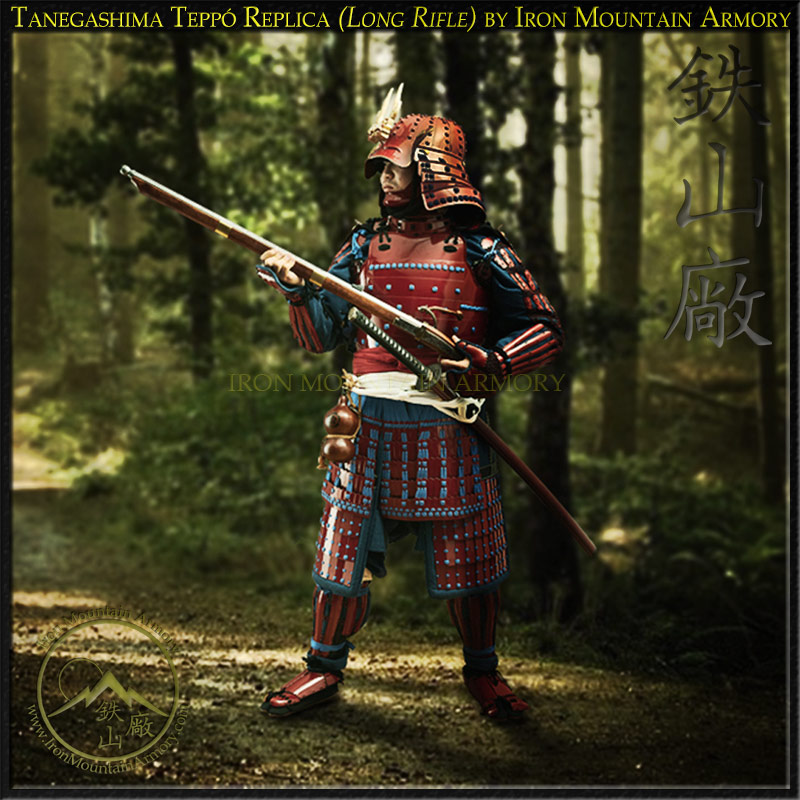
With new military forces came new tactics. Aside from the massed pikes of concentrated infantry, firearms were beginning to become available in Japan. Several very successful warlords quickly saw their value and adopted them for their armies. Takeda Shingin, for example, declared that guns would be the most valuable weapon in future conflicts, and ordered his retainers to begin arming their men with them.4 Ironically for Shingin, the defeat that his successor suffered at the Battle of Nagashino is the most well known battle in which guns were crucial. At Nagashino, the eventual unifier of Japan, Oda Nobunaga, deployed infantry armed with arquebuses behind makeshift fortifications, and used them to repel attacks by elite Takeda cavalry.5 After Nagashino, most major warlords scrambled to equip as many of their men as possible with firearms. Nobunaga’s eventual successor, Toyotomi Hideyoshi, used firearms extensively in his campaigns. Hideyoshi is recorded as using guns extensively in his campaign of unification; records show that he employed them heavily in his subjugation of Kyushu and against the Hojo clan. Indeed, some historians suggest that a main reason for the early Japanese success in Korea was the Koreans’ lack of familiarity with gunpowder weapons.6 Amusingly, when Toyotomi Hideyoshi and Tokugawa Ieyasu met in battle, both deployed their troops behind entrenchments and an arquebus screen.7 Clearly both had learned the effect that massed volleys could have on attacking forces.
Matchlock firearms were certainly an important weapon for the sixteenth century Daimyos, however they were not the only catalyst of change during the period. Indeed, they were not even the primary one. Guns fit into the wider changes in Japanese warfare, not vice versa. Perhaps the best example of this is the fact that castles continued to be built the same way that had been for centuries, even after the introduction of gunpowder weapons.8 This indicates that cannon had not been incorporated into Japanese fighting on the same level that they would be in Europe. In the same way, arquebus corps only ever formed a small part of overall Daimyo armies; even at Nagashino, the majority of Oda Nobunaga’s troops carried traditional weapons.9 This fits with an understanding of the sixteenth century as a time of general military innovation, rather than a specific gunpowder revolution. The true change of the Sengoku period was the enlarging of armies rather than the use of guns. As such, tactics changed to best employ infantry blocks, a role for which firearms were well suited. However, all of these new innovations were ultimately cut short when Tokugawa Ieyasu took control of the entirety of Japan. Once in power, the Tokugawa shogunate effectively limited the number of guns in the country and disbanding the private armies; this effectively ended the age of Japanese military innovation.10
1 Stephen Morillo, “Guns and Government: A Comparative Study of Europe and Japan,” Journal of World History 6, no. 1 (1995): 97-98.
2 Stephen Morillo, “Guns and Government: A Comparative Study of Europe and Japan,” Journal of World History 6, no. 1 (1995): 98-98.
3 Stephen Morillo, “Guns and Government: A Comparative Study of Europe and Japan,” Journal of World History 6, no. 1 (1995): 95.
4 Delmer M. Brown, “The Impact of Firearms on Japanese Warfare, 1543-98,” The Far Eastern Quarterly 7, no. 3 (1948): 239, https://doi.org/10.2307/2048846.
5 Delmer M. Brown, “The Impact of Firearms on Japanese Warfare, 1543-98,” The Far Eastern Quarterly 7, no. 3 (1948): 239, https://doi.org/10.2307/2048846.
6 Delmer M. Brown, “The Impact of Firearms on Japanese Warfare, 1543-98,” The Far Eastern Quarterly 7, no. 3 (1948): 239, https://doi.org/10.2307/2048846.
7 Delmer M. Brown, “The Impact of Firearms on Japanese Warfare, 1543-98,” The Far Eastern Quarterly 7, no. 3 (1948): 246, https://doi.org/10.2307/2048846.
8 Stephen Morillo, “Guns and Government: A Comparative Study of Europe and Japan,” Journal of World History 6, no. 1 (1995): 99-100.
9 Michael Richardson, “TEPPO AND SENGOKU: THE ARQUEBUS IN 16TH CENTURY JAPAN.,” Concord Review, 2011, 192.
10 Michael Richardson, “TEPPO AND SENGOKU: THE ARQUEBUS IN 16TH CENTURY JAPAN.,” Concord Review, 2011, 202–203.
Works Consulted
Brown, Delmer M. “The Impact of Firearms on Japanese Warfare, 1543-98.” The Far Eastern Quarterly 7, no. 3 (1948): 236–53. https://doi.org/10.2307/2048846.
Stephen Morillo, “Guns and Government: A Comparative Study of Europe and Japan,” Journal of World History 6, no. 1 (1995): 75–106.
Michael Richardson, “TEPPO AND SENGOKU: THE ARQUEBUS IN 16TH CENTURY JAPAN.,” Concord Review, 2011, 187–203.

Leave a Reply